On 24–25th February 2026, the Safeguarding of Minors and Vulnerable Adults discourse was held during the Clergy Monthly Recollection of the Diocese of Penang at the Domus, Minor Basilica of St. Anne, Bukit Mertajam. His Eminence Cardinal Sebastian Francis, Bishop of Penang, addressed the clergy and religious in a pre-recorded message. This address, intended as a common diocese directive, will be shared with all ministries serving with children across the Diocese and beyond for awareness.
Cardinal Sebastian emphasized the profound truth that Our Lord Jesus Christ placed the child at the very heart of faith formation and the narrative of the Kingdom of God. He implored:
“Keep the Child at the centre of the narrative of the Kingdom of God as Our Lord Jesus did, and you will never go wrong.”
Cardinal wholeheartedly encouraged and reminded all to join and actively participate in these Child Protection sessions. Safeguarding children, he stressed, is not merely a responsibility but a sacred duty—an expression of love and reverence for the young entrusted to the Church’s care. It is an essential dimension of evangelization and witness to the Gospel, proclaiming that the Church must be a safe and nurturing environment for every child in the Diocese of Penang.
With deep gratitude, Cardinal Sebastian expressed appreciation for the faithful service and steadfast commitment of clergy, religious, lay leaders and People of God in safeguarding children. He reminded all that this mission is sustained by Almighty God and illuminated by the words of Matthew 19:14:
“Jesus said, Let the little children come to me, and do not hinder them; for the kingdom of heaven belongs to such as these.”
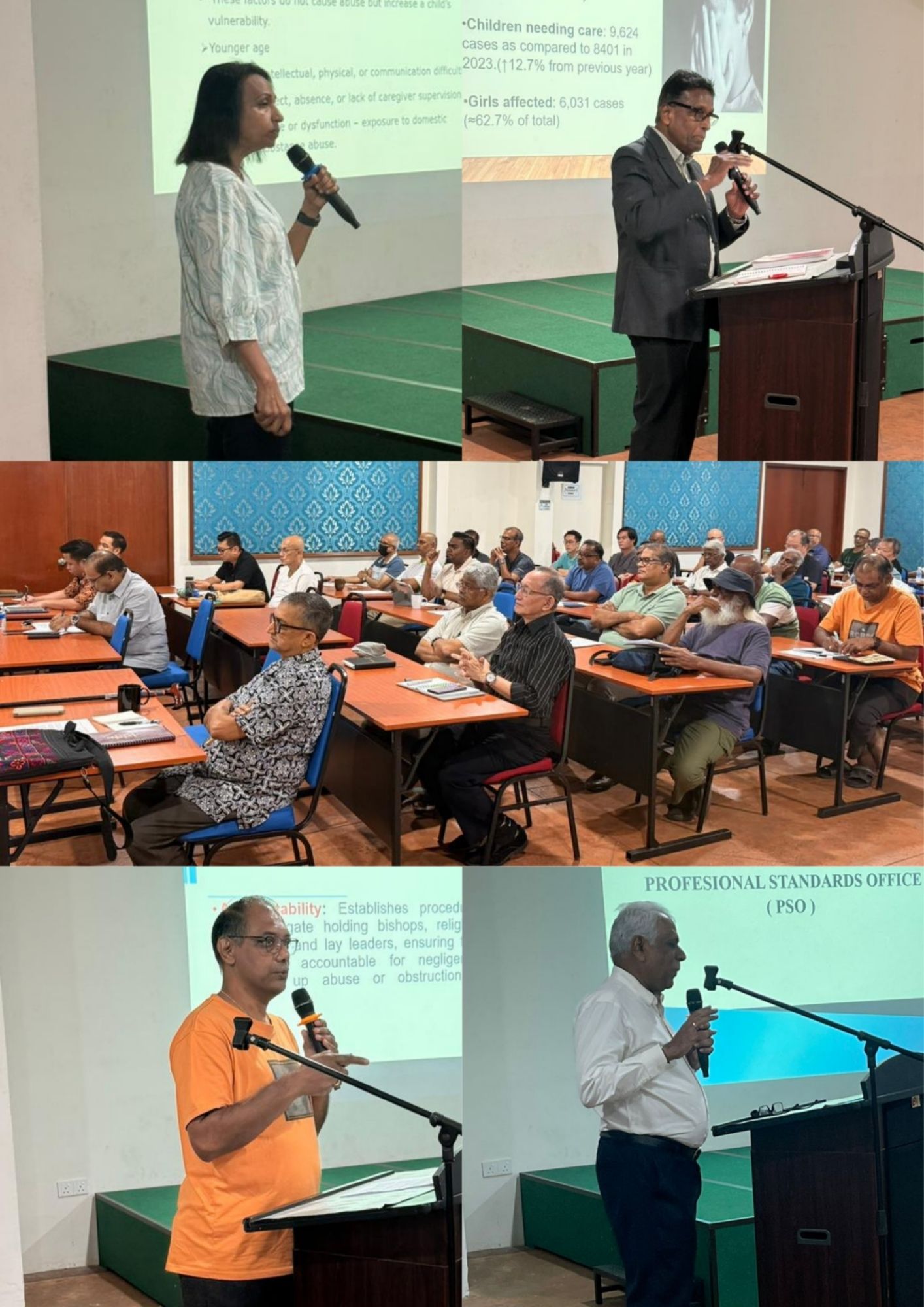
Speaker Dr Mary Bharathy, a psychiatrist, outlined the various forms of child abuse—physical, emotional, sexual, and neglect—and emphasized that abuse most often occurs within relationships founded on trust. This reality calls all of us to remain vigilant and attentive to early warning signs. A child, below 18 years of age, can never give consent; responsibility always rests with the adult. Moreover, children rarely disclose abuse immediately. Sudden changes in behaviour, fear of a particular adult, withdrawal, regression, or inappropriate sexualised behaviour may be indicators of harm and must be met with careful, compassionate, and timely attention.
Rev. Fr. Martin Arlando, a canonist, offered a detailed explanation of the March 2023 updated Vos Estis Lux Mundi (You Are the Light of the World). This document sets forth the Church’s procedural norms for addressing clerical sexual abuse and enhancing accountability among Church leaders. The 2023 revision introduced several key updates including expanding scope to include lay leaders of international associations, stronger victim protections, definition of victims to include vulnerable adults and role of Bishops and Major Superiors in conducting investigations.
Fr. Martin also highlighted the importance of the Vademecum (July 2020), prepared by the Congregation for the Doctrine of the Faith. This handbook, On Certain Points of Procedure in Treating Cases of Sexual Abuse of Minors Committed by Clerics, was designed primarily for Ordinaries and other personnel responsible for applying canonical procedures. Together, Vos Estis Lux Mundi and the Vademecum represent the Church’s ongoing effort to confront abuse with greater accountability, transparency, and pastoral care.
Lawyer Domnic updated the clergy and religious on the measures undertaken by the Church to address matters related to the safeguarding of minors and vulnerable adults. He provided a detailed explanation of the revision of Book VI of the Code of Canon Law, highlighting that these revisions were intended to equip clergy of the Church with more flexible and effective means for correction, accountability, and ultimately, the salvation of souls.
Christopher Kushi spoke on Malaysian legislation related to child protection, highlighting the growing and alarming impact of social media on young people. He stressed the government has been proactive in introducing updated and robust legal measures to safeguard children. Among the key legislative developments highlighted were the Anti-Sexual Harassment Act 2022, the inclusion of anti-bullying provisions in the Penal Code in July 2025, and the Online Safety Act 2025, which came into force on 1 January 2026. The Tutela Minorum – Pontifical Commission for the Protection of Minors has also issued the Universal Guidelines Framework (UCL) in March 2024 which aims to make the Catholic Church a safer place for everyone by establishing clear guidelines and procedures for the protection of minors and vulnerable adults.
At the conclusion of the Safeguarding of Minors discourse, Cardinal Sebastian Francis together with the clergy and religious formally signed the Diocese of Penang - ‘Standards of Pastoral Conduct’ document. The clergy and religious had last affirmed these standards in 2022. However, in light of significant developments in local legislations and the UCL’s safeguarding guidelines, the revised standards have now expanded from 10 to 15 standards. The Professional Standards Office of the Diocese of Penang has also introduced the ‘Case Management of Concerns, Allegations and Complaints and the ‘Safeguarding Risk Management Plan’.
By Christopher Kushi